
The Compost Pile
There is a mountain of available information through books, online resources, neighbours and nurseries concerning techniques and recipes for the ultimate compost project. However, for the short version, all that you have to know is that you should start composting today.
While my land and garden situation allows me to take on composting in a larger and more open (somewhat untidy) version than an apartment dweller can do, there are ways and means to take part at any level.
The most important lesson I’ve learned from my first clumsy efforts and research, is that “no matter what you do, no matter how many little mistakes you make, you are still probably going to come up with reasonably good, usable compost." (Stu Campbell – “Let It Rot”)
Why do we compost?
- Because it is a chance to feed and nourish your garden soil, replacing all of the nutrients that have been depleted through the growth and harvesting of past garden production.
- Because it costs nothing, yet offers so much in return – soil quality and composition, plant and soil health, a sense of empowerment as you take control of what you used to think of as garbage, and the peace of mind that comes with caring for the soil that we all depend upon.
- Because you will now be playing a positive part in ending much of the unnecessary transport of valuable materials to a landfill site.
-Because it is a form of quiet, but persistent revolution. It is an act of defiance in the face of a market economy that insists you should be working overtime in order to acquire cash and find comfort through increased purchase of materials. Now you are stepping out of that cycle. Giving and receiving in a non-cash exchange of goods. By composting, you are saying that you want to be responsible for both your trail of garbage, as well as feeding the new plant life, and even your garden produce.
- Because Life and Death and Decomposition and Rebirth is a beautiful dance. And composting allows us to begin to understand, and engage, and experience through touch and smell, and to participate as a helping part in that endless cycle.
Composting: Getting Started
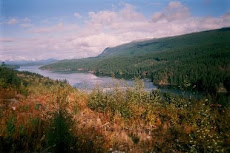
On this land, surrounded by forests and fronted by an ocean inlet, my concerns are slightly different in the specifics than those in the city. While I might worry about raccoons and black bears tearing apart my compost bins, my friends in Vancouver will be more concerned with attracting rats. I’ve built my compost bins a good distance from the house, hoping that the feral cats on the property will focus on any rats, and I avoid putting meat and grease products that might attract more rodents. Raccoons and bears have done some heavy damage in the past, but I have to accept that as part of my neighbourhood. It seems like I have less problems if I leave the compost open, but spread manure, or urine soaked woodshavings over each layer of household scraps and fruit, etc. The manure and urine/shavings also add an extra volume of nitrogen and carbon to the mix.
The most basic method and goal in composting is to combine organic waste materials so that they can decompose to a point that they form a crumbly nutrient-rich medium which can be added to your garden.
A further improvement would be to attempt to combine a variety of materials in a manner that accelerates the process and results in a balanced fertilizer composition for the garden soil. Through reading and workshops you can create a very exacting and efficient recipe, but the short version is that all materials must be bio-degradable, and that the greater variety of things in the pile, the better.
The key to decomposition, and to releasing the contained nutrients so that they can be utilized by plants, is the massive community of micro-organisms in our soil that feed upon and digest the nutrients locked up in crude form in plant and animal materials. By digesting these nutrients, micro-organisms alter the nutrient form and thereby create a constant flow of sustenance to new plant growth. Again, the simple answer is that the more diversified the mix, the more types of microorganisms will be fed and encouraged.
In order to prosper and multiply, these microorganisms need:
-Carbon: An energy source. This can include dry, tough, fibrous materials – dry leaves, straw, sawdust or fine chips, cuttings from yard work, etc.
- Nitrogen: A protein source used to break down the carbon food. They operate as activators, heating up the temperature and accelerating decomposition. These materials include green vegetation, grass clippings, and manure.
The elements listed above should ideally be balanced at a Carbon:Nitrogen ratio of approximately 25:1. Twenty-five parts Carbon materials, with one part Nitrogen material. Higher Carbon content slows down the decomposition process. Higher Nitrogen content can often result in smelly pile in which Nitrogen is lost as ammonia gas.
However, we return to the highlighted main point of the column. Just get started. We’ll learn and adapt along the way.
The other two essential elements are:
-Oxygen: required by some of the most efficient microorganisms (aerobes). Without sufficient oxygen (such as a very heavy, dense and wet pile that is never turned), decomposition slows by as much as 90 percent. That said, it still continues. All is not lost.
- Moisture; Different materials will require different amounts of added moisture. Add water to dry materials as they are added, so that the average has the consistency of “a well-wrung sponge”. Approximately 40-50% moisture level. If water is running out of your pile onto the ground, it is too wet. If you add a large quantity of dry materials, they’ll need to be hosed down. Fresh green materials are likely fine as they are.
With a good balance of materials and moisture, and with occasional turning of the pile, the temperature of the pile will heat up, perhaps as hot as 150 or 160 degrees F. At these temperatures, even pathogens and weed seeds will be quickly destroyed, and full decomposition can occur in a matter of weeks. At lower temperatures, some of those seeds might survive, but then earth worms and other insects will likely be more attracted to the pile to take over decomposition duties. The process will take longer, but it will still all work out.
I built a three-bin compost container in the yard. As well, I have a number of other single bins built using old pallets on a number of locations where I plan to plant another garden in the coming year or two. With the moveable pallet method, it allows me to create the fertile compost directly in the location where I want good soil. Any nutrients that leach out of the pile will be flowing into the new garden soil.
The trick is to chop the material into small enough bits (using a powered shredder if you have one, or (as I do) with a machete) before adding them to the pile. Otherwise it can be much more difficult to occasionally “turn” the pile - repositioning materials so that they can more completely decompose through balanced interaction and the resultant higher composting temperatures.
However, even if you elect to simply follow the Ogden Style (“Lazy-man’s method) - building large piles, built over time, adding layers of soil between compost materials, and covering with sod to insulate, and waiting for at least two years as the process worked slowly on the materials – you will be moving in a good direction.
After a period of weeks or months, the compost material is largely broken down into crumbly soil – like well-rotted manure. It can then be worked into your gardens as you prepare them. You can dig it in during the fall, after the first hard frost, but before the ground freezes solid. The nutrients will be waiting for you when you plant in the following spring.
Alternatively the compost can be broadcast or worked into the soil before spring planting, ideally about a month before you begin planting seeds. It can also be spread in an arc around fruit trees, or used as top dressing around vegetables or berry plants.
A few compost-pile trouble-shooting tips:
-If there is an unpleasant odor coming from the pile:
Either there is not enough oxygen getting to the materials - in which case you should turn and loosen the pile, or install perforated pipes to get oxygen into the center - Or, the pile is too wet, thus blocking the flow of air. In this case, the above solution is also helpful, as would be adding dry carbon materials such as cornstalks, wood chips, etc to absorb some of the water.
-If there is a strong ammonia smell:
Usually indicates an excess of Nitrogen materials. Try adding more carbon, as well as oxygen, as described above.
-If the pile is not heating up (and has not yet completed decomposition)
A first step would be to simply “turn” the pile, to see if the movement and oxygen can initiate new decomposition. Alternatively, the pile might need more nitrogen-rich materials to activate decomposition. Or, if the materials are very dry, they might need only additional moisture.
There are plenty of good books for reference. Also, usually events such as B.C.’s “Seedy Saturday”, or local “Food Security” groups sponsor composting workshops.
The basic information listed above has been drawn from online sites, personal experience and a number of books, including Stu Campbell’s “Let It Rot: The Gardener’s Guide to Composting.”
-


No comments:
Post a Comment