A Second Introduction
Taking Time to Write
It feels good to finally take a moment and begin recording a few thoughts and events that have taken place since the new year began.
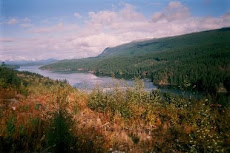
When you live on a small plot of land in the rainforest of the Pacific Northwest, you have to make a point of doing something – some bit of maintenance, building, planting, weeding, wood cutting, fixing, etc – everyday just to hold on to what you have. Rainy winter months want to wash your efforts away. Mould grows in hidden corners. Carpenter ants and termites thrive in these conditions. The forest floor and fern bogs behind the house are black with rotting organics.
It reminds me in some ways of the experience I wrote about while in the Darien jungle region of Panama. There can be a claustrophobia that engulfs you in a rainforest. It seems that you can never fully set down your machete if you want to keep a little patch of sky and open air around you. And if you were to sit patiently for long enough in that open patch, then the surrounding bole-climbing vines would follow your shadow lines and climb over you and encase you; slugs and worms, centipedes and maggots all doing their part to turn your patient body back into fertile soil.
I also understand that most of these feelings come from the desire to change a natural forest into something different - my vision of what I want to see here – a mix of forest and gardens, orchards and wetlands. Likely the best thing I can do is to look at what already works here (forest stands, mushrooms, wild berries and fruits, native ground cover mixes, etc.), and then adapt much of my plans to work with those elements. I also have to accept that many of these firmly-established populations such as slugs, deer, bears, horse-tails, and black berries are often going to look at my puny efforts as their good fortune. Perhaps they’ll silently thank me as they choke my gardens or harvest the vegetables and fruits while I sleep at night. All I can do is to say “you’re welcome.” I’ll look at the disaster scene in the early morning, drink my coffee, and make a new plan.
Since deciding to make this shift to a more sustainable balance of life, I had a very slow start for the first few months. Much of that was caused by the need to earn enough to make the payments on the half of the mortgage that my former land-partner (and very good friend, Bill) used to be responsible for. After he decided that he wouldn’t be able to spread himself between his home in California and his second home on this ocean inlet, I took over his payments and began the process of searching for one to three other partners to own the land as a community co-op land-share title. As of last month, another good friend, Kymo, has decided to purchase a ¼ share and to build his cabin with materials that exist on the land (Cedar, Douglas Fir, stone, sand, clay, etc).
In response to that, I have begun work to move the road access to the back of the property. By doing this, we will free up the former driveway area along the waterfront, for orchards, gardens and building sites. It will also give us better access to the back of the property where there are growing conditions that might be suitable conditions for other food gardens (mushrooms, Wasabi, blueberries, …) as well as potential habitat for raising ducks.
For the last few months, I’ve been working steadily on the property. However, similar to the activity of trying to write a book, or to “fix-up” an old sailboat, it often seems like we are accomplishing nothing. With every project completed, I see three new ones that I hadn’t noticed before. And for every simple task to do, there are three steps ahead just to get to that task. For instance, Tova and I wanted to cut some firewood from a big Douglas Fir that had fallen during a storm. Before we could get to that project, I remembered that the chain on our saw had to be sharpened, and that I needed to get to town to buy a new file for that. As well I noticed that the truck’s back tire was low on air, and in order to fill the tire I would have to do some repair work on the compressor’s regulator to get the tank to fill, and then drag out the generator (which hadn’t been used for months) in order to run the compressor since our smaller solar inverter isn’t strong enough to start the compressor. You get the picture.
In the last couple months, it has felt so good to get back to the simple and physical task of preparing and planting gardens around the house.
In his beautiful book "Trauma Farm: A Rebel History of Rural Life," Brian Brett writes:
In a garden you learn the value of time. Weeding, like farming, is never accomplished. It’s an activity, not a result, so a good gardener learns not to fret about finishing a job… You work until your mind runs free. (p. 77-78)
I will likely quote more from Brett’s beautiful book in future posts. His family’s experience during their past eighteen years on Willow Pond Farm is a very worthwhile read.
I find that even if I’m not trying to write a book, it’s good to take the time to record a few notes, and maybe even sketch or photograph some scene or detail that we noticed while weeding or building. It helps to stop all of the busy-ness.
These occasional notes and photos are better than trying to record “everything” – something that often happens when gathering material for a magazine article or book. In that situation, I can sometimes get so caught up in the act of documenting the moment that I end up with the record, yet having completely missed the true experience. It has to be somewhere between the two.