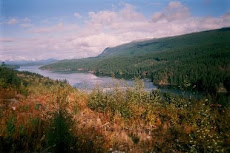
Even after a cold and wet and cloudy March, everything starts happening in April.
By April 2, the flats of tomatoes were mostly germinated and pushing out of the starter soil. I had been worried about the vigour of my saved seeds from last-year’s tomatoes. Mostly I was concerned over the method I had used to save and store the seeds. I have read instructions that call for much more elaborate methods, but I opted to simply choose ripe tomatoes (the riper the better – without allowing it to rot or become mouldy), and then cutting it open and smearing the seeds onto a piece of paper towel, or paper from a paper bag. Then I labelled the paper and left it out on my table for a handful of days until all of the moisture had evaporated. When it had dried sufficiently, I folded the paper and added it to my bag of stored seeds.
This year’s germination rate of all the varieties appears to be close to 100%, so I can vouch for the effectiveness of this method. Even the tomatoes that weren’t as ripe as I wanted for seed saving, have germinated well. I know that many gardeners have told me that I need a proper grow light, set very low near the tiny starts or the tomatoes will become leggy and weak. And yes, this concerned me. At the same time, I know that it wasn’t so long ago that the majority of gardeners in this area did not have electricity and grow lights.
My thoughts in these situations are to absorb information from all of those people around me, because almost all of them have much more growing experience than I do. And many of them have found their way around pest and climate conditions without the use of chemical sprays or other high-tech solutions. However, ultimately I have to be the one who makes the decisions as to what is possible or not for me, in this location, in this climate, with these goals or desires that I have.
When the tomatoes first germinated in the open flats, most of them were indeed leggy and weak looking. Especially in my location – facing East and South, the daylight hours are shorter than optimum. However, to compensate for these less optimum conditions, I decided to start the plants early, and then at each transplant, I stripped off the lower leaves and buried most of the small stock into the new soil.
By mid April, I had transplanted all of the spindly starts into 3” pots. It became obvious at that time how much I had overplanted. At that point I was able to select only the healthiest ones, choosing 4 or 5 of each of the 25 varieties I had saved from last year. Still ending up with a lot of tomato starts. By burying the main stock into the pots, the new starts became much stronger and thicker than they would have been otherwise.
Around the end of the month, I moved this stock from the indoor growing window, into the new greenhouse that I had just completed. I did this to slow some of the upward growth and to begin hardening the tomatoes before they are planted in late May.
By the end of April –with the addition of a few different varieties from Jonathon and Jenna - I had 30 tomato varieties growing. Each variety has its own strengths. Some are early producers. Others keep well through the winter months, and others might be best for drying or canning. In a later post I will make a list of all types. I plan to save seeds from all of those that do well, and in this way develop a good inventory of plants tailored specifically to these light and soil conditions, as well as to my needs and tastes.
In the outdoor gardens, I planted out many of the greens I’d started in the greenhouse or indoors. In this forested property, there are a lot of insects and slugs that eat up the tiniest starts if I sow the seeds directly into the soil. By starting in flats, the survival ratio is much higher.
By mid April I had planted into the beds many broccoli starts, along with lettuce, Chinese greens, cabbage and spinach. In another plot, I planted out the first batch of beet, turnip, rutabaga and kohlrabi starts. Later in the month, I directed seeded rows of carrots, along with fennel and celery starts. Being as it was still very wet and quite cold at nights. I used cedar lumber and rolls of thin plexiglass that someone had given me a few years ago to build a number of 3’x5’ windows that I could lean together to make cold frame tunnels over the various garden patches.
Also, in mid April, I built a new climbing lattice, using branches from a fallen alder tree. Near the end of the month I moved the climbing pea starts from the greenhouse and planted them out around the lattice. Since it was still cold and wet, especially during the nights, I leaned some of the new cold-frame windows against the lattice to help give a slightly better climate for them to survive. Once again, most people will direct-seed their peas, but on this property, it helps to transplant the starts.
Meanwhile, plenty of kale and chicory and other greens from last fall and winter were all exploding with new leaves and later with florets that were delicious and plentiful while waiting for the new greens to become established. This year, my plan is to focus more attention on growing a great winter garden. As well, certain plants can be planted in late summer so that they are almost mature by the time winter sets in. Then, in the first warmth of the new spring, they will suddenly finish their cycle with plenty of new growth, leaves and florets, during the late winter and early spring, just as we are craving fresh produce.
Meanwhile, plenty of kale and chicory and other greens from last fall and winter were all exploding with new leaves and later with florets that were delicious and plentiful while waiting for the new greens to become established. This year, my plan is to focus more attention on growing a great winter garden. As well, certain plants can be planted in late summer so that they are almost mature by the time winter sets in. Then, in the first warmth of the new spring, they will suddenly finish their cycle with plenty of new growth, leaves and florets, during the late winter and early spring, just as we are craving fresh produce.