.
Mostly Quiet
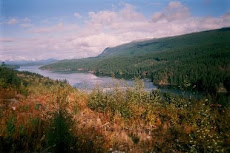
During the first week of September, I hiked and camped on T. Island off the coast of British Columbia. I spent my days searching for animal tracks and Black-tail deer. I examined their droppings, rubbing them between my fingers and comparing the shine and size and softness. I discovered the location of scrapes on alder and cedar trees where bucks return again and again to rub the velvet off their new antlers. There were plenty of does and fawns in open areas, but bucks usually stay out of sight during daylight hours. They push in deep under thickets or behind tall salal bushes so that they’re well hidden from hunters
During the first week of September, I hiked and camped on T. Island off the coast of British Columbia. I spent my days searching for animal tracks and Black-tail deer. I examined their droppings, rubbing them between my fingers and comparing the shine and size and softness. I discovered the location of scrapes on alder and cedar trees where bucks return again and again to rub the velvet off their new antlers. There were plenty of does and fawns in open areas, but bucks usually stay out of sight during daylight hours. They push in deep under thickets or behind tall salal bushes so that they’re well hidden from hunters
For the first three days on the island, I didn’t speak a single word. I walked and ate and slept alone. I would usually stop in the afternoon to eat the fruit and cheese I’d brought along. If it was hot, I would swim in the ocean at one of the isolated coves and then find a mossy bluff for a nap. Later, as the afternoon sun began to cool, I would find a good spot to wait and watch for the deer to begin moving again.
On the fourth day, my friend Cowpoke arrived to camp beside me. He’s an odd and angular character, with thick glasses and a red beret, but he has focused his life around animals and has become a teacher for me. Sometimes we hiked together. At other times we went our own ways and then met again to cook supper as the sky grew dark.
Two days later, just as the light was fading in the early evening and I was standing alone behind a large cedar stump, a proud three-point buck stepped out from the forest and into the grassy meadow. I was wearing Cowpoke’s camouflage pants and jacket. There was just a light breath of evening breeze working in my favour, and I felt a pocket of cool air filling the meadow. The buck took three careful steps into the tall grass. Then he stopped, staring out across the field, his disproportionately large ears turning independently, searching for any hint of danger.
On T. Island there aren’t any bears or cougars or wolves. Man is a deer’s only predator, and bucks seem to be aware of that, tracking the yearly cycles to anticipate the start of hunting season. Throughout the month of August, you can often see bucks boldly moving through open areas. Sometimes they even use my truck bumper to scrape the velvet from their antlers, but as September arrives bucks disappear into thicker forests during daylight hours.
Last winter, in January, I made this same trip with Cowpoke. It was my first visit to the island, and we hiked through the hills and along ocean bluffs. Sometimes there was snow or ice on the ground. Sometimes it was pouring rain. Often it was hard to sleep in the tent at night with storm winds tearing at the fabric, and giant cedars and Douglas firs groaning and bending, massive branches shaking the ground when they crashed down near our tent.
I didn’t fire a single shot with the crossbow during that trip. A number of times I had the cross-hairs in the scope set just above and behind a deer’s forward shoulder, on the soft entry to his heart and lungs and body organs, but each time I had to relax my trigger finger. I had never killed a deer before. Sometimes I started to question what I was trying to do. Other times a single branch blocked a clear shot to the kill zone, or the distance was slightly beyond what I was confident to fire, or the light had faded to the point that the scope image was too vague and faint. Sometimes the reasons were less clear.
On this September evening, during the first week of the hunting season when only bows are allowed, the buck moved closer to where I stood motionless. I moved only my eyes to scan the meadow. He stopped again and began feeding sixty feet away – a perfect distance for a shot with a crossbow bolt, but his body angle was difficult. So I waited. I had the cedar stump to brace against. The scope sight and the bow were steady. I wanted him to turn and put his flank more square to my shot. I remained still. Quiet breaths. The light faded and daytime colors began to slip into evening greys. I watched through the crosshairs, both eyes open, my index finger still outside the trigger guard.
After so many hikes, and years of reflection on whether it was ethical or natural to kill another beautiful being and to eat its flesh, I had settled with my decision. I knew that I could argue well for so many different viewpoints – animal rights, doing the least harm, the health of our food, environmental concerns, respect for all life, sustainable sustenance, anthropological and cultural beliefs, and on and on. But at this moment I was ready to set aside that endless internal circle of questions and the judgements I felt from inside and out.
I would wait for the right shot. I would be as certain as is physically possible. I would wait until the deer was close, and until the shot was clear, and I could see into his eyes, the movement of his breath in his nostrils and lungs, his chest swelling and contracting, his ears canting side to side. I felt confident now that I could field-dress the animal so that his essence, meat, hide and organs would all be treated well, with respect and without waste. It was still about killing another sentient being, but I would also consider the deer as a gift offered to me. And with every gift accepted, I understood, there are also these obligations.
I looked through the scope, cross-hairs just behind the upper part of his shoulder. I consciously turned off my heart fears and focused only on the decision to kill well. The three-point buck stopped eating, and he looked up from the meadow grass. Still I waited. He turned his head toward me. My finger moved to the trigger. The metal against my skin. Then he turned a little more, this time with his chest and body as well so that the cross hairs rested solidly on his heart and organs. I breathed in and out again. At the end of the exhale I began to squeeze my right index finger through the long trigger action, moving smoothly until it stiffens slightly at the threshold point. Still steady. I pulled through the point of resistance.
The crossbow bolt shot across the space between us. A frail rubber O-ring held the expanding broad-head tip closed and compact during the brief flight. Then the impact against his body. The rubber ring snapping as the broad-head tore into his chest, forcing the razors open so that they could rip and tear through his organs, through his heart and lungs and his flesh.
The deer jolted upwards. He exploded running, cloven hooves tearing up the grass and leaves and cedar needles as the evening darkened. I watched the first part through the scope, not moving the crosshairs, following through like I’d practiced time and time again on target cardboards. For a second I doubted my shot. I wondered if I’d missed completely, or if the bolt had just glanced off his body and startled him. For a second I wondered at what I’d done, why I chose to kill this proud deer, all of the arguments, the ‘fors’ and ‘againsts’, but I pushed it out my mind. I focused only on finding the blood trail and of finishing what I had started.
Twenty feet from where he had been standing, I found the bolt on the ground. One of the blades was twisted out of shape, but his blood drops smeared the length of the fletching so that I knew it had passed completely through his body. I saw the scuff marks and loose pebbles where he had rounded the corner, charging for cover in the forest, thinking only of thickets and bushes where he could burrow and hide.
A three-point buck. He must have known without words that he should never have walked into an open meadow against a headwind. He was old enough to have experience, to recognize the risk. He must have avoided other close calls on T. Island with all of the hunters that come every year. Maybe he first tried to deny what had happened, but likely he already knew that he was dying.
Did he feel ashamed? Was he angry with some god, or at himself? Had he seen me at all, and did he understand where the sudden pain had come from? Was he embarrassed to be dying beneath his tall crown of proud antlers still red from the alder and cedar rubs? I didn’t wonder about these questions at that time.
I waited motionless until after he had charged around the corner, and then I followed his desperate tracks as they me led towards the forest. The first explosion of panic had carried him in full flight through a small pocket of trees, his legs and body fuelled by reflex and what was left of the stored power in his body. Even with his blood draining onto the grass and needles, his desire was enough to lift him across the early stretch of the meadow until after what was only a few short seconds, but seemed so much longer, he felt the unforgiving pull of gravity and the release and the emptiness.
When I rounded the corner, I saw his body lying in the meadow where he had collapsed still thirty feet before the trees. He tried once to lift his chin, but his head was already down under the weight of the antlers. If he’d managed to reach the forest, it would have been hard to follow him in the early darkness. He would have escaped deep beneath the low branches and scrub, hoping to lose me so that he could die alone with his sorrow.
By the time I knelt beside the deer, he was breathing only the shallowest of breaths. Seconds later, even that stopped. I spoke quietly, to myself or to him. I took hold of his antler to steady his head. I reached across him, and with the hunting knife in my other hand, I cut through his neck, his wind pipe and arteries to finish bleeding his heart. Only a trickle flowed from the opening.
The sky was almost dark, and the autumn air was growing cold. I called Cowpoke to join me, and we put on headlamps and used a block and tackle to hang the deer from a sturdy tree. I used my hunting knife to cut a circle through the fatty tissue around the anus and its attached intestine that leads into the body. I took a short cord and cinched it around the exit to stop feces from contaminating the meat. Using the same knife, I slit the hide on the deer’s belly from its crotch to its sternum, and then split the breastbone to open the body cavity wide.
The sky was almost dark, and the autumn air was growing cold. I called Cowpoke to join me, and we put on headlamps and used a block and tackle to hang the deer from a sturdy tree. I used my hunting knife to cut a circle through the fatty tissue around the anus and its attached intestine that leads into the body. I took a short cord and cinched it around the exit to stop feces from contaminating the meat. Using the same knife, I slit the hide on the deer’s belly from its crotch to its sternum, and then split the breastbone to open the body cavity wide.
The deer’s stomach and intestines were still warm. As they spilled out of his body, we used our hands to control them, fingers cradling his intestines to keep the bladder intact, and to separate the liver and kidneys from what was going to fall and eventually feed other animals. I reached inside to pull loose a last attachment from the anus so that the cinched cord followed everything out through the belly as it fell free to the ground. We used our knives to free the connective tissue binding the hide, pulling from underneath to “fist” the hide from the deer’s body, cutting it free from his legs leaving the head and antlers still attached until daylight. By the light of our headlamps, we picked out loose hairs with a soft rag and then wrapped the hanging body in a clean sheet to keep flies and animals from the meat through the night.
It was colder by then so that I knew that the deer would cool quickly. We would have to get moving early in the morning to take it from the forest before the sun warmed the air. Cowpoke built a campfire to sit by. We sat and talked. Sometimes I would walk over to look again at the white sheet hanging ghostly in the night, now a few spreading stains near the bottom hem where the last blood was draining.
Eventually Cowpoke fell asleep beside the fire. I’d kept him awake most of night helping me and guiding all of the work on my first killed deer. In the morning he’d be tired and his body would ache, but if I made a pot of coffee early, he wouldn’t complain. That’s the way he is.
I lost track of time. I remember that at some point during the night, I chased away two raccoons and, later, a squirrel that I saw crossing on the branch above the deer. A loon sang her lonely song in the dark, but with Cowpoke sleeping across from the fire and the deer hanging behind me in the shadows, I didn’t feel alone. I stoked the fire for company and kept it burning through the hours of the night. A number of times an owl called and it echoed in the hills. Once in a while I would hear the roll of ocean water washing in on a nearby pebble beach, and sometimes I noticed the comforting crackle as the firewood burned. But besides those sounds, I can’t remember hearing anything else. Mostly it was quiet.